
Last updated: November 2, 2026
For U.S. cosmetic clinics, Google review management organizes how staff find and use public feedback while protecting patient privacy. At Anzolo Medical, our Medical Reputation Management service supports that workflow alongside monitoring across other relevant review sites and social media.
What Is Google Review Management for a Cosmetic Clinic?
Google review management is a repeatable workflow for checking a clinic’s Google Business Profile reviews, requesting authentic feedback, preparing privacy-conscious responses, flagging suspected policy violations, and tracking patterns over time. The goal is to make feedback useful to the practice and its prospective patients, not to manufacture a favorable rating.
How Does It Fit Into Medical Reputation Management?
Google review management is one part of medical reputation management. At Anzolo Medical, our broader service also monitors Yelp, relevant healthcare review sites, and social media mentions; prepares action plans for negative reviews or other reputation-damaging events; and creates and promotes positive content about your clinic. Looking at patterns across platforms gives your team a fuller picture than its Google rating alone.
How Can a Clinic Find and Monitor Its Google Reviews?
Clinic staff can monitor reviews through the clinic’s Google Business Profile and its public Google listing. To find the public reviews, search for the clinic’s name in Google Maps, open the correct business listing, and select the Reviews tab. A designated staff owner should enable available review notifications and continue checking the listing directly for new posts. That person can identify feedback needing a response or internal follow-up and keep a secure record of assigned actions. Public reviews do not give staff access to private patient records through Google.

Confirm that the clinic has access to the correct profile and establish who approves replies. Record the review’s public location and the next action without copying sensitive details into an unsecured marketing document. Anzolo Medical can connect Google monitoring with its wider review-site and social-media monitoring.
Where Can Staff Find the Clinic’s Google Review Link?
Staff can look for the shareable review link in the clinic’s Google Business Profile and test it before using it in outreach. Keep the approved link in a shared staff resource so reception and marketing staff use the same destination. Review the public listing as well, since that is where prospective patients may encounter both reviews and clinic responses.
How Should a Cosmetic Clinic Ask Patients for Google Reviews?
A cosmetic clinic should invite voluntary, honest Google reviews through a consistent process using its approved review link. Staff may offer a link card, an in-clinic prompt, or an appropriately reviewed email request. The invitation should welcome any genuine experience, make clear that posting is optional, and avoid asking for a particular rating.
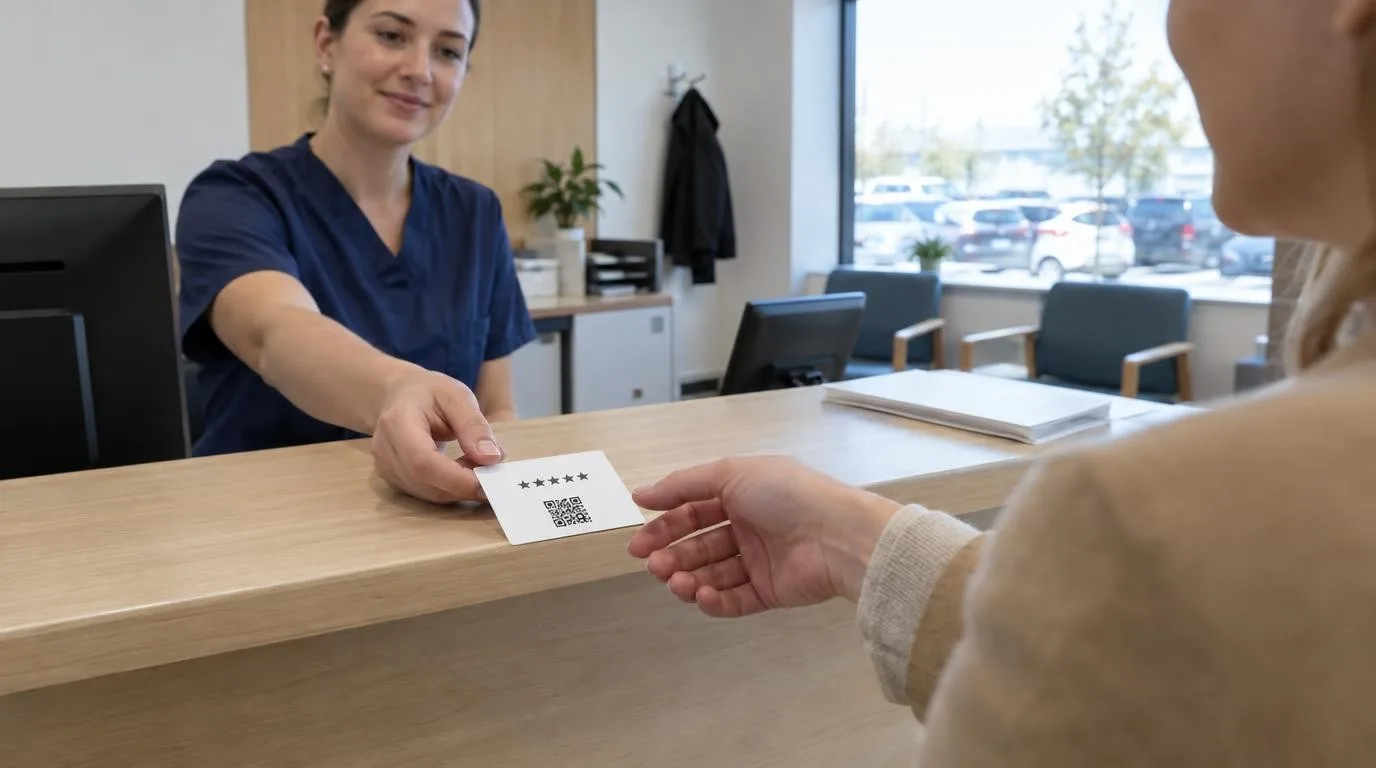
For example: “If you would like to share feedback about your experience, you can use this Google review link. Please share only what you are comfortable making public.” Before sending outreach, have the clinic’s privacy and communications leads review the message, recipient selection, and delivery process. The American Association of Oral and Maxillofacial Surgeons’ guide to doctor review sites recommends making review requests simple, including through post-visit email.
Can I Leave Multiple Google Reviews for a Business?
If you have already reviewed a business listing with your Google account, edit your existing review to add details instead of posting another. A clinic should not ask people to post additional reviews to push a rating up or down, nor should staff create reviews on anyone’s behalf. Feedback is most useful when each review reflects a person’s own experience.
What Should a Clinic Avoid When Requesting Reviews?
Avoid incentives, requests for a favorable rating, fabricated reviews, and requests sent only to people presumed likely to praise the clinic. The American Dental Association’s guidance on managing practice reviews cautions that incentives can raise endorsement and platform-rule concerns. An honest-feedback process gives people room to describe both positive experiences and concerns.
How Should a Clinic Respond to Positive and Negative Google Reviews?
Clinic responses should acknowledge feedback without confirming that a reviewer is a patient or discussing care in public. Staff should use an approved, general reply for routine comments and offer a private contact route when follow-up is appropriate. Serious concerns should go to the practice team, not become a public discussion of records or treatment.
A positive review may need only a brief “Thank you for sharing your feedback.” For a negative review, staff can acknowledge the concern and invite the writer to contact the practice through its usual private channel. Our guidance on responding to negative healthcare reviews offers a closer look at planning those replies.
What Can Staff Say Without Confirming Someone Is a Patient?
Staff can say, “We appreciate feedback and take concerns seriously. Please contact our practice directly so the appropriate team can review your concern.” Even when a reviewer identifies themselves publicly, avoid phrases such as “Thank you for visiting us” or references to a procedure, appointment, or outcome: a practice reply can independently confirm a treatment relationship.
What Happens When a Reviewer Raises a Serious Concern?
Route the concern promptly to the practice manager or other appropriate clinic lead under the clinic’s established process. Authorized staff can assess what follow-up is needed through private channels; the public reply should not discuss that assessment. At Anzolo Medical, we aim to respond to negative reviews within 24 hours, and clinics can approve responses before posting. That response target is not a guarantee that the underlying concern will be resolved within that time.
Can a Clinic Remove a Fake or Misleading Google Review?
A clinic can flag or dispute a Google review it believes violates platform rules, but reporting a review does not guarantee removal. Staff should document the suspected violation, submit the report through the available platform process, and consider a privacy-conscious public reply. A genuine negative experience is not a policy violation simply because it is unfavorable.
Anzolo Medical can help a clinic navigate flagging and disputing a review, but we cannot remove the review ourselves. Keep the internal assessment factual: identify the specific concern, preserve the review’s public location, and avoid making public claims about whether the writer received care.
When Should Staff Flag a Review Instead of Replying Publicly?
Flag a review when staff have a concrete reason to believe it breaks a current platform rule, rather than using a public reply to argue about its legitimacy. The clinic may still decide that a brief, general response is helpful while a report is pending. If the post raises a substantive service concern, send that concern through the clinic’s private follow-up process regardless of whether the review is flagged.
Is It Better to Leave Reviews on Google or Yelp?
If you want to leave a review, consider where people in your area look for cosmetic clinics, how your name will appear, and whether the site may filter your review. The American Society of Plastic Surgeons’ article on online plastic surgery reviews explains differences between Google and Yelp that may affect your choice:
| What matters to you | Yelp | |
|---|---|---|
| Where readers find reviews | On the clinic’s public Google listing. | On the clinic’s Yelp listing. |
| How your name appears | See the Google privacy FAQ below before posting. | Reviewers post under a first name and last initial. |
| Whether a submitted review is shown | Published reviews appear on the public listing; platform rules still apply. | Yelp filters some reviews, including positive ones, so a submitted review may not appear among its recommended reviews. |
A study in Plastic and Reconstructive Surgery analyzed 1,077 breast augmentation reviews of highly reviewed surgeons in six large metropolitan areas and found that the relative use of Google and Yelp varied by region. If you use Google to compare local clinics, it is a practical place to share your experience; if you rely on Yelp, choose it if you are comfortable with the identification and filtering differences above.
How Should Clinics Manage Reviews on Healthcare-Specific Sites?
Claim or review relevant profiles, check incoming feedback, and use the same privacy review for public responses. Before inviting reviews on any healthcare-specific site, check that site’s current solicitation rules instead of copying the Google request message unchanged. A study in Facial Plastic Surgery & Aesthetic Medicine analyzed 957 unverified patient-generated comments about 100 U.S. facial plastic surgeons. Healthgrades and Vitals were the most frequently used of the four sites examined, and 55.28% of comments mentioned patients’ perceptions of their outcomes—a theme beyond conventional patient-experience survey questions. The comments can therefore be useful signals, without being treated as verified clinical records.
How Can a Clinic Tell Whether Its Review Workflow Is Working?
A clinic can assess its review workflow by tracking review volume, rating direction, response coverage, response timeliness, recurring sentiment, and concerns still awaiting follow-up. Those measures show whether staff are collecting feedback and acting on it consistently. No single measure proves that reviews caused a change in patient inquiries or search visibility.
Compare trends with the actions the team took, such as a revised request message or a change to the response approval process. A rise in reviews may be useful, but recurring concerns about communication or scheduling may be more actionable than the overall rating.
Which Review Trends Belong in a Monthly Report?
A monthly report should make it easy to see both public-facing trends and internal work still open. Anzolo Medical’s reputation audit identifies strengths and areas for improvement, while our monthly reporting covers review scores, sentiment, actions taken, and return on investment. Our guide to using healthcare review feedback explores how recurring comments can inform practice decisions.
- Review activity: New reviews and changes in rating trends by relevant platform.
- Response work: Reviews answered, replies awaiting approval, and how promptly the team responded.
- Feedback themes: Repeated praise, repeated concerns, and changes worth discussing with clinic staff.
- Open items: Concerns referred for private follow-up and reviews flagged for a suspected rule violation.
Frequently Asked Questions
How do I give a cosmetic clinic a Google review?
Search for the clinic on Google or Google Maps, open its business listing, select the option to write a review, choose a star rating, and post your feedback. You may need to sign in to a Google account. Share only details you are comfortable making public, especially when describing medical care.
Can I leave a Google review of a cosmetic clinic anonymously?
Do not assume your Google review will be anonymous. It appears under your Google account’s public name, which may identify you; a pseudonymous account may offer more privacy. Even with a pseudonym, details about your care may identify you, so share only information you are comfortable making public.
Can someone review a cosmetic clinic without having surgery there?
Yes. A review may reflect a consultation or another interaction rather than completed surgery. In the Plastic and Reconstructive Surgery study of breast augmentation reviews discussed above, 9.4 percent of negative Google reviews were written by people who did not undergo surgery. That fact alone does not make a review fake or justify disputing it.
Which review sites should a cosmetic clinic check besides Google and Yelp?
Check sites that patients in your area actually use. RealSelf focuses on aesthetics, breast reconstruction, and facial reconstruction, while Healthgrades and Vitals are broader healthcare review sites. Claim or review relevant profiles, then check each site’s rules before requesting feedback there.
Can a cosmetic clinic link to its reviews from its website?
Yes. A clinic can add a link that lets visitors read its reviews on the original platform. A ‘Read My Reviews’ tab on a practice website or social page can direct visitors to the original review platform. Check that links still work, and do not imply that selected reviews represent every patient’s experience.
Can a clinic get alerts when its name appears online?
Yes. The American Association of Oral and Maxillofacial Surgeons recommends a Google Alert for practice mentions or a reputation management service, and advises claiming review-site pages and enabling available notifications. A name alert is not a substitute for checking Google Business Profile reviews directly; assign someone to review both.
Does Anzolo Medical offer training for clinic staff on review management?
Yes. At Anzolo Medical, we offer staff training on reputation management best practices. Training can support a clinic’s review workflow alongside our monitoring and response services. The clinic should still assign staff to monitor reviews, approve public replies, and route concerns privately so responsibilities remain clear after training.
How Can a Cosmetic Clinic Start a Sustainable Google Review Workflow?
- Check profile access, the public listing, existing reviews, and the shareable review link.
- Assign staff responsibility for monitoring, drafting responses, approvals, and private follow-up.
- Approve a voluntary request message and the channels staff may use to share it.
- Set a privacy-conscious reply process and a separate route for serious concerns or suspected policy violations.
- Review platform trends and unresolved actions in the monthly report.
If your cosmetic or plastic surgery clinic would like help putting that process in place, contact Anzolo Medical for a consultation about a reputation audit and ongoing, multi-platform review support.

